
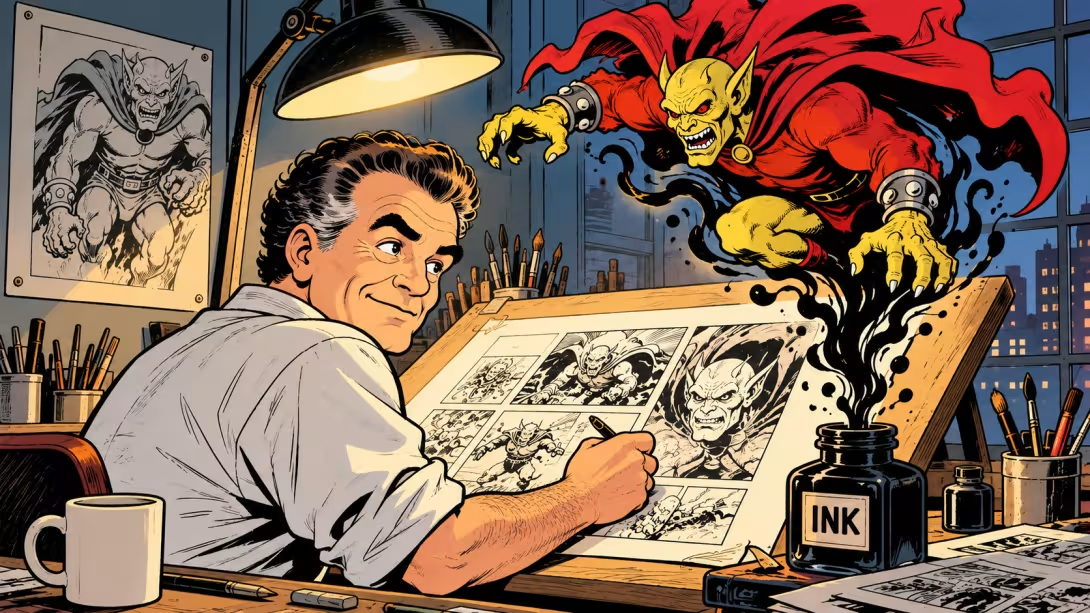
Speak the Words, Release the Demon: DC's Occult Revival
Jack Kirby unleashed Etrigan upon the DC Universe in 1972. More than half a century later, the Demon is going back to press, and a long-lost chapter of his mythology has finally emerged from publishing limbo.
There are easier ways to sell comic books than putting a demon on the cover. Batman offers a familiar promise of justice, Superman provides a reassuring measure of hope, and Wonder Woman can usually be counted upon to know which side of a conflict deserves her support. Etrigan, on the other hand, might save the world, burn it down, or negotiate a better arrangement with whatever is threatening it.
That uncertainty has helped keep him interesting for fifty-four years.
DC's latest The Demon series, written and illustrated by James Harren, debuted October 7, 2026. Now the first issue is returning to press for a December 2 release, joining Michael Walsh's Jonah Hex and the Shadow of Death #1 in receiving a second printing. Absolute Batman: Ark M #1 is also receiving a fourth printing, scheduled separately for December 16.
For DC's supernatural stable, the news arrives at an appropriate moment. Halloween provides the seasonal atmosphere, but the more interesting development is that readers are being offered new interpretations of characters who don't fit neatly into the company's usual superhero machinery.
The second printing of The Demon #1 will feature Harren's original cover with updated trade dress, a new Harren variant, and a foil edition of Daniel Warren Johnson's variant cover. Issue #2 arrives November 4, introducing a prince of Hell with a personal grievance against Etrigan.
DC has not disclosed the sales figures behind the additional printing, so there is no basis for declaring a commercial phenomenon. Still, the decision to produce more copies demonstrates that the publisher sees sufficient demand to justify keeping the opening chapter available.
For a character who has repeatedly moved between starring roles and supporting appearances, the additional printing is a welcome development.
Jack Kirby Opens the Gates of Hell
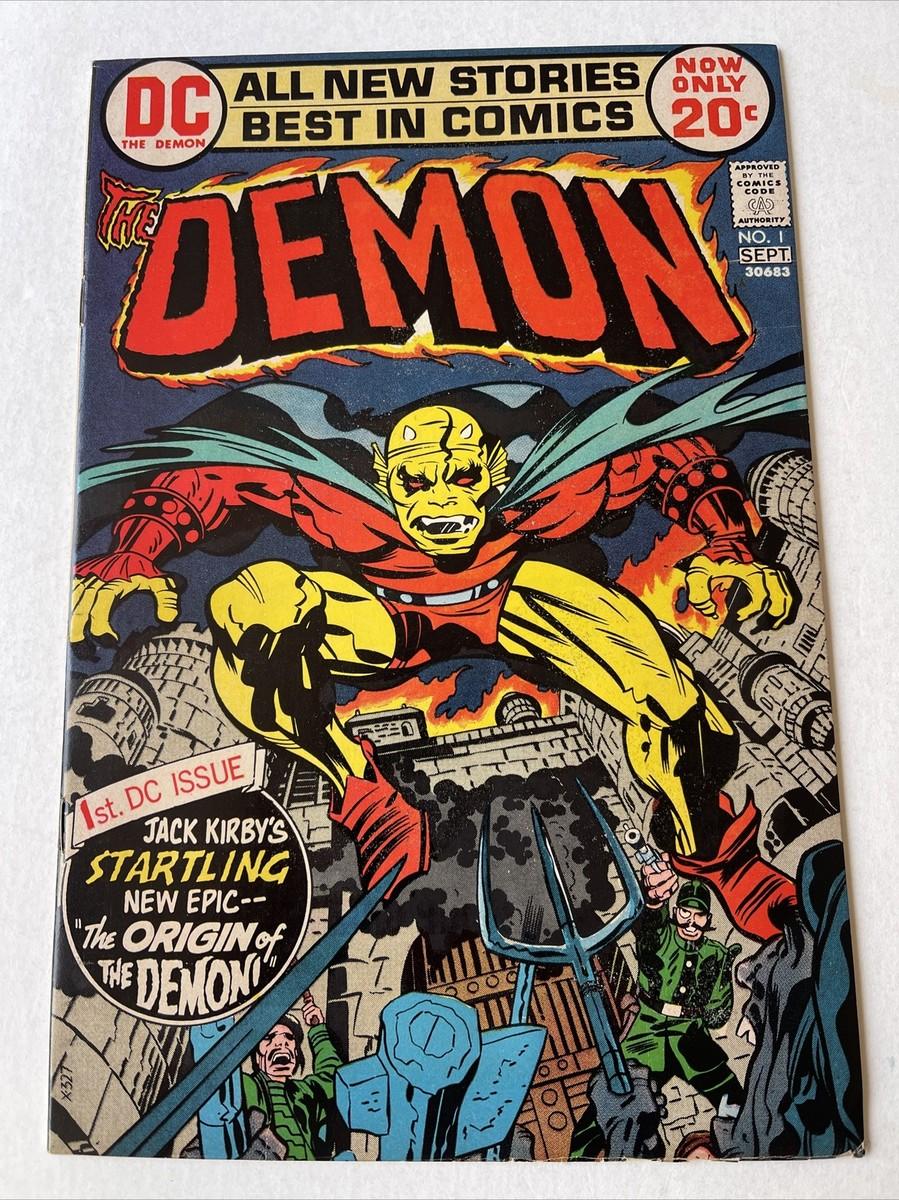 Jack Kirby introduced Etrigan in 1972, during a period when American comics publishers were rediscovering the commercial possibilities of horror. Rather than create a conventional monster, Kirby reached into Arthurian legend and emerged with a character who could operate equally well in a medieval nightmare or a modern superhero adventure.
Jason Blood appeared to be a man living in the present, but his existence had been shaped centuries earlier at Camelot. Through Merlin's sorcery, Blood was bound to Etrigan, a demon whose power came with a personality considerably less accommodating than the human forced to share his fate.
The original The Demon series ran for sixteen issues, introducing characters and conflicts that would remain part of DC's supernatural mythology. Morgaine le Fey, Klarion the Witch Boy, and the lingering consequences of Merlin's magic gave Kirby plenty of room to build stories that were not dependent upon the presence of Batman or Superman.
The relationship between Blood and Etrigan was the real engine of the series. Jason possessed access to extraordinary power, but calling upon it meant surrendering control to a creature with its own desires and loyalties. Etrigan could be directed toward a common enemy, but nobody should have mistaken cooperation for obedience.
Kirby had created superheroes whose powers threatened to overwhelm them before. With Etrigan, the threat was more personal. The power was alive, it could speak for itself, and it might have very different ideas about how a problem ought to be solved.
The conflict survived the original series' cancellation, giving subsequent writers a foundation upon which to build.
The Demon Who Learned to Rhyme
Etrigan's appearance is unmistakable, but his voice has become just as important to his identity. His dialogue often arrives in rhyming verse, lending even a straightforward threat the sound of an ancient curse.
Curiously, that was not how Kirby consistently wrote him.
As DC's historical examination of Etrigan's speech explains, the Demon rarely rhymed in his original appearances. The incantation that summoned him employed verse, and Etrigan occasionally used rhyme for emphasis, but ordinary conversation did not require him to maintain a poetic structure.
The convention took shape in 1984, when Len Wein had Etrigan speak consistently in rhyme in DC Comics Presents #66. Alan Moore developed the idea further in Saga of the Swamp Thing #27, identifying Etrigan as a member of a class of rhyming demons within Hell's hierarchy. DC's own account of the character's history confirms that progression.
What began as a relatively small change became one of the character's defining characteristics.
The rhymes make Etrigan instantly recognizable, even when he appears without warning in another character's book. They also give writers a formidable assignment. Threats, exposition, insults, and the occasional reluctant expression of concern must be delivered without making the Demon sound like an unwilling participant in a school poetry competition.
At their best, the verses suggest a creature for whom language itself is an instrument of intimidation. Etrigan speaks as though he knows something his audience does not, and he is enjoying the opportunity to reveal it at his own pace.
Later interpretations have offered different explanations for the habit, including John Byrne's suggestion that it resulted from the magic binding Etrigan to Jason Blood. The rhyming-demon classification, however, remains one of the character's most enduring additions.
Kirby supplied the monster; later writers gave him a voice that could steal a scene before he threw a punch.
Neither Hero Nor Villain
Etrigan occupies an uncomfortable position in the DC Universe because he cannot be trusted to share the moral priorities of the heroes who occasionally need his assistance.
He can confront supernatural evil without becoming good himself. He may protect human beings when their survival serves his interests, yet display very little concern for their welfare under different circumstances. The same abilities that make him a valuable ally can make him a terrifying opponent.
Jason Blood provides the human perspective, although the relationship between the two has varied considerably across interpretations. Sometimes Blood is the jailer keeping Etrigan restrained. Sometimes he is the victim of an ancient curse. At other times, the two operate with an uneasy understanding that neither can survive indefinitely without the other.
That arrangement lets writers move between genres without abandoning the central conflict.
A superhero adventure can use Etrigan as the dangerous ally whose intervention threatens to create a larger problem. An occult mystery can exploit his knowledge of forces beyond human comprehension. A horror story can dispense with the pretense of heroism and remind readers that the creature beneath Jason Blood's skin is, after all, a demon.
DC's supernatural characters have long occupied this territory. Swamp Thing, Deadman, the Spectre, and John Constantine inhabit stories in which victory can be compromised, justice can arrive at a terrible cost, and survival may depend upon bargaining with something that should never have been summoned.
Etrigan belongs among them precisely because he is not easily domesticated into a conventional superhero.
The Supernatural Side of DC Never Really Went Away
The current Demon series is not the character's first revival, nor does it represent a sudden discovery that horror comics can attract readers.
Matt Wagner brought Etrigan back in a 1986 miniseries, and subsequent creative teams continued exploring the character in ongoing and limited series. In 2017, Andrew Constant and artists Brad Walker and Andrew Hennessy revisited Jason Blood's attempt to isolate himself from the world in The Demon: Hell Is Earth.
As DC described that earlier revival, Blood had withdrawn from society in an effort to prevent Etrigan from being unleashed again.
There is a wonderfully perverse problem at the center of that premise. Jason Blood's most responsible course of action may be to keep the Demon imprisoned, while the readers have purchased the comic expressly to see him escape.
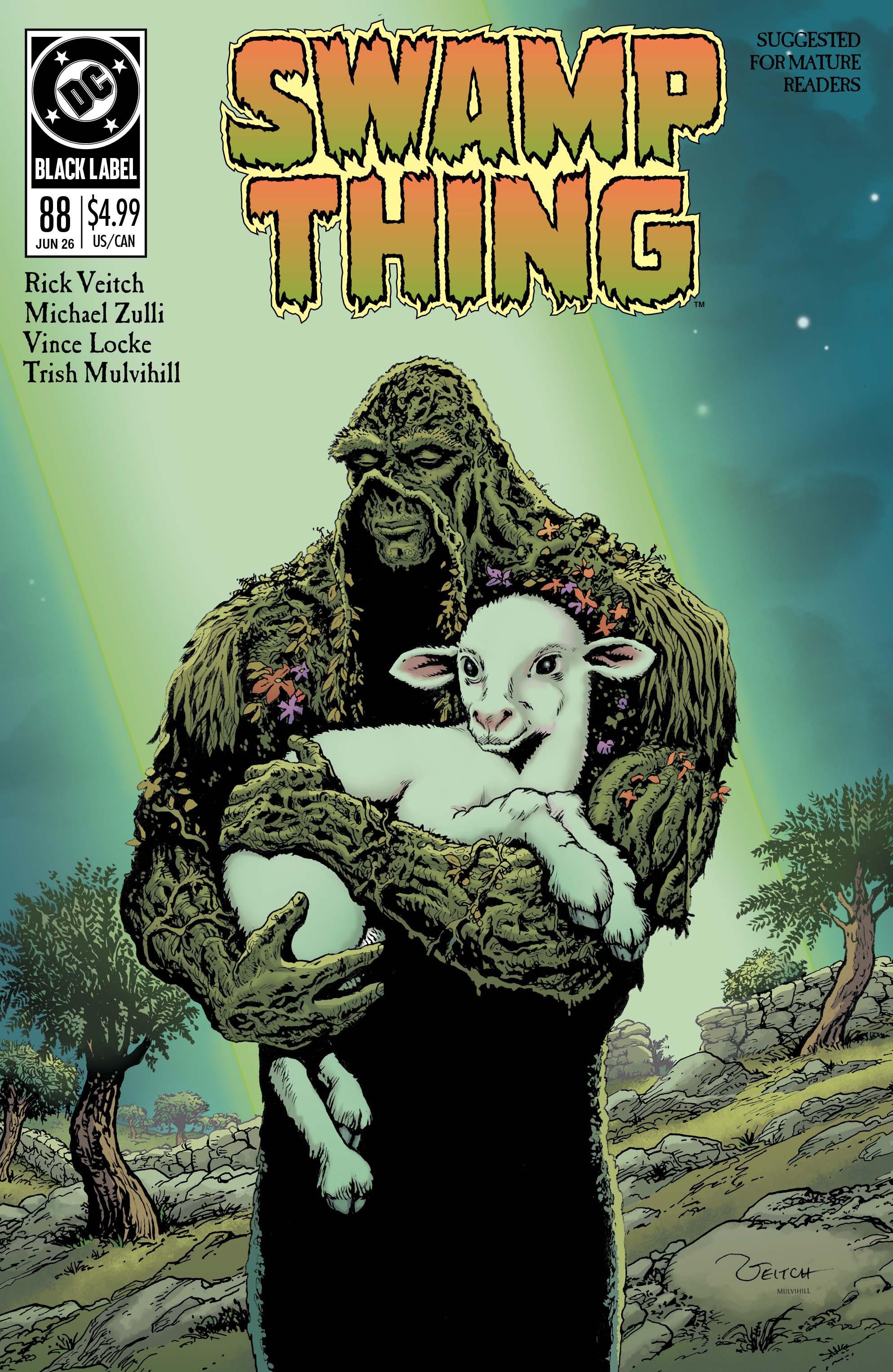 This year has also brought a remarkable recovery from DC's publishing past. The company released Swamp Thing 1989, completing Rick Veitch's long-abandoned storyline more than three decades after the original plans collapsed.
The four-issue project began in April and concluded in July. Its first installment restored material intended for Swamp Thing #88, with Michael Zulli's original pencils completed by Vince Locke. Later issues featured artwork by Tom Mandrake.
The project matters to Etrigan's history because, as DC explained when announcing the restoration, Veitch's time-travel saga included an exploration of the Demon's origins.
That makes 2026 an unusually interesting year for the character. Readers have received both a new interpretation of Jason Blood's struggle and the publication of material intended to expand Etrigan's mythology back in 1989.
The restoration is particularly striking. A story once considered lost to editorial controversy has finally reached the audience for whom it was originally intended, while the character it explores continues into another generation of comics.
For an immortal demon, thirty-seven years is probably a minor inconvenience. For the people who waited to read the story, it was rather more substantial.
James Harren and the Next Level
James Harren's new series returns to the psychological conflict that has defined Etrigan since Kirby's original run.
According to DC's description of The Demon #1, Jason Blood has endured centuries of witnessing humanity's suffering at the hands of infernal forces. His fractured mental state and divided soul place him in a confrontation with a hidden darkness consuming the world.
Harren is handling both the writing and illustration, with Dave Stewart providing colors. The arrangement gives the series a unified creative approach to a character whose effectiveness depends heavily upon atmosphere, physical presence, and the contrast between Blood's humanity and Etrigan's monstrous nature.
The second issue introduces a prince of Hell seeking revenge against Etrigan. DC's solicitation for the November 4 release frames the confrontation around Jason's willingness to release the creature within him.
The territory is familiar, but the central dilemma remains compelling.
Jason Blood knows what Etrigan is capable of doing. He also knows that the alternative may be to allow something worse to prevail. Every transformation carries the possibility that the solution will become another threat.
The second printing offers readers another opportunity to enter that conflict at its beginning. Whether the series can sustain interest beyond the initial issues will depend upon what Harren does with a character whose mythology has been revisited repeatedly over the past half-century.
A successful Etrigan story needs more than spectacular demonic violence. It needs to make the reader understand why Jason Blood would ever risk opening the door again.
A Curse That Outlived Its Creator
Jack Kirby left Etrigan with an unusually durable premise. The character does not require a new costume, a revised origin, or a wholesale reinvention whenever the publishing industry changes direction. His fundamental problem has remained recognizable since 1972.
Jason Blood has lived far too long with a creature he cannot entirely control. Etrigan possesses immense power but remains trapped in a relationship that limits his freedom. Their shared existence turns every supernatural confrontation into a negotiation between necessity and danger.
Other creators have added mythology, refined the dialogue, and altered the balance of power between them. The essential contradiction has survived.
DC's decision to send The Demon #1 back to press is modest news in the context of a publishing industry that measures success through blockbuster franchises and major crossover events. Yet the timing gives it a pleasing historical symmetry. The same year that readers finally received a missing chapter of Etrigan's past, they are being invited into another chapter of his future.
Some characters endure because readers know exactly what they will do when trouble arrives. Etrigan endures because nobody, including Jason Blood, can ever be entirely certain.
The Demon has returned to the printing press. Whether that is good news for anyone living in his fictional universe remains another matter.