
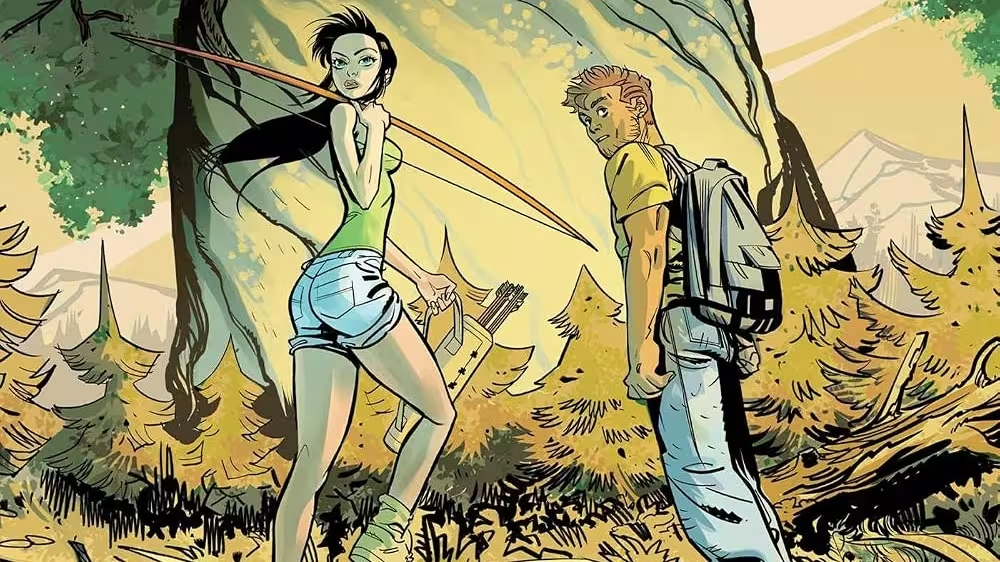
From Kickstarter to Comic Shops: White Ash Comics Joins IDW Publishing
For independent comic book creators, Kickstarter has become something of a double-edged sword. It provides a way to finance projects without surrendering creative control to a traditional publisher, but it also creates a business model in which every new book can require another campaign, another promotional push, and another round of fulfillment. Even successful creators can find themselves spending nearly as much time managing the business of crowdfunding as they do creating the comics that attracted their audiences in the first place.
White Ash Comics may have found a way to break that cycle. After raising more than $1 million through crowdfunding, the independent publisher is joining forces with IDW Publishing to bring its interconnected fantasy universe into comic shops and bookstores beginning in April 2027. The arrangement represents a significant expansion for a company that has spent the better part of a decade building its audience one campaign at a time, and it offers an intriguing example of how crowdfunding success can become the foundation for something considerably larger.
The partnership, announced by IDW on October 27, will establish White Ash Comics as a dedicated imprint within the publisher's expanding lineup. Rather than simply collecting previously crowdfunded material, the new publishing program will introduce remastered editions, additional stories, and an ongoing series designed to carry the fictional universe forward.
For creators who have wondered what comes after a successful Kickstarter campaign, the answer might be sitting on the shelves of their local comic shop.
A Million Dollars, One Universe, and a Pennsylvania Coal Town
Created by writer Charlie Stickney, artist Conor Hughes, and colorist Fin Cramb, White Ash is set in a struggling Pennsylvania coal-mining town where the seemingly ordinary lives of its residents intersect with supernatural forces, ancient mysteries, and romantic entanglements. The series blends contemporary character drama with elaborate fantasy mythology, occupying territory somewhere between the supernatural storytelling of television's Supernatural and the sprawling, interconnected worldbuilding of Saga.
What began as an independent creative project has developed into a substantial fictional universe, supported by an audience willing to finance its continued expansion. According to industry publication ICv2, White Ash Comics has completed 28 Kickstarter projects, collectively raising more than $1 million. Its more recent campaigns have generally brought in amounts in the mid-five figures, demonstrating that the property has developed a continuing customer base rather than relying on a single breakout success.
That distinction is important because crowdfunding revenue is not the same thing as profit. Campaign proceeds must cover production, printing, shipping, fulfillment, platform fees, and whatever other expenses accompany the promised rewards. A million dollars raised does not necessarily translate into a million-dollar business, but it does demonstrate that customers have repeatedly been willing to purchase the company's products.
More importantly, White Ash has accomplished something that can be considerably more difficult than financing a comic book: it has established a recognizable brand around a fictional universe that readers want to revisit.
For IDW, that represents an opportunity to bring an existing property with a demonstrated audience into a broader distribution network. For White Ash, it represents the possibility of reaching customers who have never backed a comic book on Kickstarter and may never have heard of the property otherwise.
Three Titles Lead the Charge
The new White Ash Comics imprint will launch in April 2027 with White Ash #1, beginning an ongoing series that will serve as the foundation of the expanded publishing line. June will bring The Game #1, followed in September by Glarien: Short and Deadly, a limited series featuring a character described as the world's most dangerous elf.
The September release will also inaugurate a continuing program of limited series intended to explore the history, mythology, and supporting characters of the larger White Ash universe. The strategy suggests that the partnership is being structured around a sustained publishing schedule rather than a one-time effort to introduce previously crowdfunded material to retail customers.
Stickney will continue as publisher and CEO of White Ash Comics, while Hughes, whose professional credits include Void Rivals, will serve as chief creative officer. Nicole D'Andria will oversee editorial operations, Tango will head design, and Travis Escarfullery will manage production.
The company is already preparing to introduce the line to retailers, with a promotional ashcan planned for the ComicsPRO meeting in February 2027. Additional retailer promotions, an expanded cover program, and collected editions are also being developed as part of the transition.
These are familiar elements of the traditional comics business, but they represent a different approach for a company whose products have primarily reached readers through direct crowdfunding campaigns. Instead of building an individual campaign around each release, White Ash will be working within the ordering, distribution, and promotional systems that serve comic shops and bookstores.
The shift also creates new challenges. Crowdfunding allows creators to measure demand before committing to production, while traditional retail distribution introduces the uncertainties of retailer orders, shelf space, inventory, and customer discovery. Success with one audience does not automatically guarantee success with the other, although arriving with an established readership certainly provides a stronger starting position than launching an entirely unfamiliar property.
From Crowdfunding Success to Publishing Sustainability
The larger significance of the White Ash announcement lies in what it suggests about the evolving relationship between independent creators and established publishers.
For decades, aspiring comic book creators faced a familiar dilemma. They could seek opportunities with traditional publishers, navigating the contractual and financial arrangements those relationships required, or attempt to produce and distribute their work independently. The latter approach offered greater autonomy but frequently imposed significant financial risks and distribution limitations.
Crowdfunding changed that equation by allowing creators to establish demand before committing to expensive production. Rather than persuading a publisher that an audience might exist, creators could demonstrate that readers were already willing to pay for the product.
White Ash Comics has taken that approach further than most, using successive campaigns to build not merely a catalog of individual books but an interconnected universe with an identifiable creative team and a loyal customer base. That audience, developed outside traditional retail channels, has now helped make the property attractive to an established publisher.
The arrangement also illustrates that crowdfunding and traditional distribution are not necessarily competing strategies. A campaign can finance an initial edition, establish a readership, and create awareness, while subsequent retail availability can introduce the same property to customers who missed the original offering.
That second stage is especially important because comic books do not stop being commercially valuable simply because their crowdfunding campaigns have ended.
A book that was successfully funded, printed, and delivered remains a product that may interest new readers months or years later. Without some form of continuing distribution, however, reaching those customers can require creators to return repeatedly to the same promotional methods that supported the original campaign.
Traditional publishing infrastructure offers one possible solution, allowing a title to remain available through established retail channels while its creators devote more attention to developing additional material.
The White Ash partnership is an unusually visible example of that transition, but the underlying business principle applies well beyond companies raising seven figures through crowdfunding.
Creator Ownership in an Expanding Marketplace
IDW has increasingly positioned itself as a home for distinctive creative properties, balancing major licensed franchises with original works such as Locke & Key and Beneath the Trees Where Nobody Sees. Bringing White Ash Comics into that environment allows the company to expand its creator-driven catalog while acquiring access to an established fantasy universe and its existing audience.
IDW CEO Davidi Jonas emphasized the company's interest in developing fictional worlds with room for continued expansion, describing the White Ash universe as a natural fit for the publisher's ambitions.
Stickney, meanwhile, characterized the arrangement as the realization of a creative ambition that began a decade ago. In the company's announcement, he expressed enthusiasm about bringing the stories to bookstores and comic shops in their originally intended format, with new material expanding the mythology alongside the established stories.
The announcement does not disclose the financial terms of the partnership or the specific contractual provisions governing intellectual property rights. White Ash Comics identifies its publications as creator-owned, and its existing leadership will retain prominent roles within the new imprint, but those facts alone do not establish precisely how the rights and revenues are divided between the companies.
That distinction matters in an industry where the phrase creator-owned can describe a variety of contractual arrangements. Ownership of intellectual property, publishing rights, distribution rights, and revenue participation are related considerations, but they are not interchangeable.
What the publicly announced arrangement does establish is that an independently developed property can attract a traditional publishing partner without abandoning the creative organization responsible for its success.
For other independent publishers, that may be the most encouraging aspect of the announcement. The traditional publisher is not necessarily the starting point of the creative enterprise; it can become a partner after the property has already established its identity and demonstrated its commercial appeal.
The Book Doesn't End When the Campaign Does
There is a fundamental difference between successfully funding a comic book and establishing a sustainable publishing business. The first requires convincing enough customers to support a particular project. The second requires creating opportunities for that project, and the properties surrounding it, to continue generating revenue long after the initial production costs have been covered.
Crowdfunding has proven remarkably effective at the first task. The second remains an ongoing challenge for independent creators, particularly those who lack access to established retail distribution networks.
White Ash Comics has spent years demonstrating that readers will financially support its characters and stories. Beginning next April, the company will test whether that support can translate into an ongoing retail publishing line capable of attracting customers beyond its existing Kickstarter audience.
There are no guarantees. Comic shops face their own economic pressures, retailers have limited shelf space, and the presence of a recognizable publishing logo does not automatically translate into sales. Even a property with an enthusiastic crowdfunding following must compete for attention in a marketplace crowded with established franchises and new releases.
Nevertheless, the partnership represents a significant milestone for an independent publisher that began with a creative idea and built its audience through direct customer support.
The million-dollar fundraising achievement makes for an impressive headline, but the more consequential story may be what happens next. White Ash Comics is attempting to turn a series of successfully funded projects into a continuing publishing operation with a presence in the wider comics marketplace.
If that transition succeeds, it will provide another example of how independent creators can use crowdfunding not as the final destination for their work, but as the beginning of a much longer commercial journey.
After all, the most successful comic book campaign shouldn't necessarily be the one that raises the most money. It might be the one that gives a story the opportunity to keep finding new readers long after the campaign itself has become history.